Kink, community
Boot and Gear Culture: A Beginner's Guide for the Kink-Curious
· findlucid
Curious about boots, leather, and gear culture in the gay scene? A celebratory beginner's guide: what gear culture is, why people love it, event etiquette, and how to start on any budget.
Adults only. This article is written for consenting adults 18+. It describes a consensual adult activity. Nothing here is medical, legal, or psychological advice.
Walk into a leather bar or a fetish night and the first thing you notice is the sound: boots on concrete, harnesses clicking, the low murmur of a room where everyone dressed with intention. Gear culture is not a costume party. For a lot of gay men, it is identity, ritual, and community stitched into leather and laces.
Maybe you have felt it: the pull toward a well-worn pair of boots, the smell of leather at a bar, the charge of a room full of men in gear. This guide is for the curious. It explains what gear culture is, why people love it, how the etiquette works, and how to start without spending a fortune.

What gear culture actually is
Gear culture is the part of gay kink community organized around apparel as fetish and identity: leather, boots, rubber, uniforms, sports gear, and the rituals built around them. It grew out of the post-war gay leather scene and has been thriving ever since, with its own bars, parties, contests, clubs, and a yearly calendar of events.
A few things it is not: it is not cosplay, and it is not an excuse to treat strangers like props. The core idea is that the gear means something to the person wearing it. A pair of boots can carry years of memories, trips, and scenes. Treating the gear with respect means treating the person with respect.
Why people love it
Ask gear guys what it is about and you hear recurring themes.
- **Identity.** Gear tells the world who you are before you say a word. For men who spent years hiding, putting on boots and leather in a bar full of people who get it is a kind of homecoming.
- **Ritual.** Gear culture runs on rituals: polishing boots, helping a partner into leathers, the bootblack chair where someone tends your boots for a fee or a tip. These small ceremonies turn everyday objects into something with weight.
- **Sensory play.** Leather smells like something. Rubber feels like something. Boots change how you walk and how you are perceived in a room. Gear is a full-sensory experience before anything else happens.
- **Service and care.** Boot care is its own subculture, often an act of service: cleaning, conditioning, polishing. Caring for someone's boots is a classic low-key entry into power dynamics.
- **Community.** The gear scene is social. Clubs run bar nights and fundraisers, and regulars know each other by their boots as much as by their faces. For newcomers, that structure is a gift: there is always a room to walk into.
The gear, demystified
You do not need to know every subculture on day one, but here is the lay of the land.
- **Boots.** The cornerstone. Work boots, military boots, motorcycle boots, engineer boots. Shine levels vary by scene: some crowds go mirror-shine, others go broken-in and worn. Both are legitimate; both have their fans.
- **Leather.** Jackets, vests, pants, chaps, harnesses, caps. Full leather looks are a commitment and a price tag, which is why most people build their kit over years, not weeks.
- **Rubber.** Latex and neoprene: bodysuits, shorts, shirts. Rubber culture has its own events and its own sensory world, including a strong overlap with puppy play and sportswear fetish.
- **Uniforms and sports gear.** Military, firefighter, and sports uniforms (soccer kits, singlets, jockstraps) each have their own communities and party nights.
None of these is a requirement. Plenty of people start with one item and find their people from there.
Etiquette: the rules that actually matter
Every scene has norms, and gear culture is explicit about its good ones. Here is what experienced players wish beginners knew on night one.
- **Ask before you touch.** This is the big one. Someone's boots, their leather, their harness: do not grab it, rub it, or lick it without asking first. A compliment is always welcome. Contact is by invitation.
- **Gear means something.** Do not treat someone's leather like a costume at a party. For many people it is identity-level. Curiosity is great; mockery is a fast exit.
- **The bootblack chair is a scene.** Bootblacks at events offer boot care as a service, often for tips. Treat it like a service: ask about prices or tips, and do not treat the bootblack as a kink vending machine.
- **Read the dress code.** Some nights have strict gear dress codes; others are gear-optional. Check the event listing. Showing up in street clothes to a gear-required night is uncomfortable for everyone.
- **Consent still rules everything.** Gear does not imply consent to anything. Being in a leather bar in full gear does not mean you have agreed to anything beyond being in the room. Negotiation, boundaries, and the right to say no apply here exactly as they do everywhere else in kink.
Getting started without spending a fortune
Good leather is an investment, but beginners have plenty of low-cost doors in.
- **Start with one piece.** A decent pair of boots, a simple harness, a jockstrap, a leather cap. One item you wear well beats a full kit you cannot afford.
- **Buy secondhand.** Kink markets, fetish vendor stalls at events, and secondhand sales within clubs are how most people build their collections. Leather lasts decades when it is cared for, so secondhand is often the smart buy, not the cheap one.
- **Thrift and surplus.** Military surplus stores are a gear-culture staple for a reason: real boots, real uniforms, real history, fair prices.
- **Care is the culture.** Conditioning leather, shining boots, storing rubber properly: maintenance is part of the practice, and doing it well earns you respect faster than spending more.
- **Rent the night.** Some gear nights are casual-friendly. A clean simple look plus genuine curiosity will get you further than anxiety about not having the right kit yet.
The event calendar: your best classroom
Fetish event season runs through the fall, and the big events are the fastest education available. Folsom Street Fair in San Francisco just wrapped its 43rd annual edition on Sunday, September 27, drawing the leather, gear, and kink communities together in one of the largest gatherings of the year. Coming up: HustlaBall Berlin (October 15 to 18) and Amsterdam Leather and Fetish Pride (October 15 to 19), which hosts contests like Mister Puppy Netherlands.
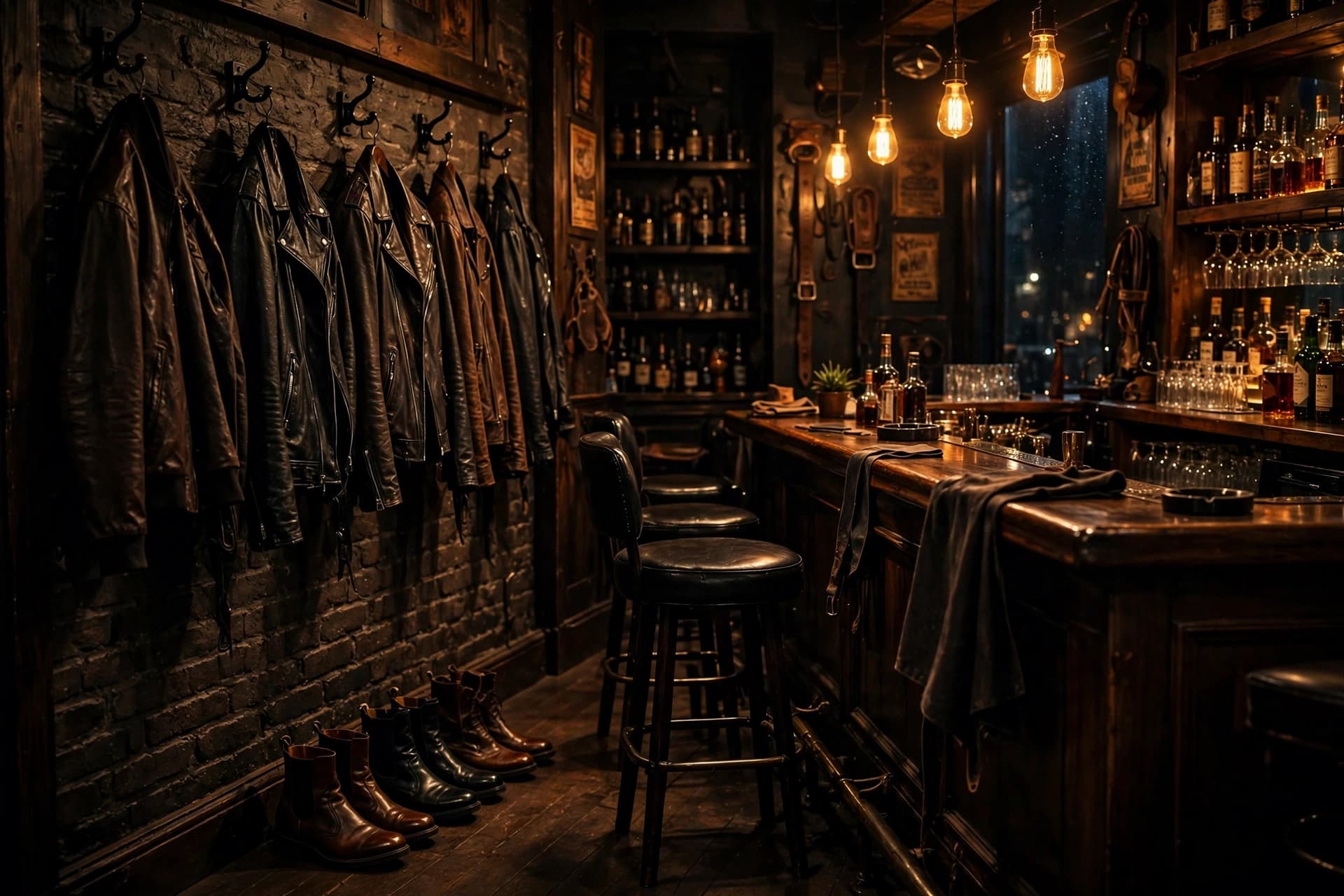
You do not need to fly anywhere to start. Most cities with a gay scene have at least one leather bar or gear night. Go on a regular night, not the biggest party of the year. Buy a drink, watch, ask questions when people are not mid-scene. Regulars remember the respectful newcomer and will teach you more in one evening than a month of scrolling.
When gear meets dating
Gear shows up on dating profiles too, and it works exactly like everything else in the culture. A photo in full leather is not an invitation to skip the conversation. Ask what the gear means to them, what they are into, what their boundaries are. The guys who take gear seriously will respect you for asking. The negotiation is part of the play, and in gear culture that negotiation has been the tradition for decades.
Start where the curiosity is
Gear culture endures because it gives people something rare: a way to look like who you are, rituals that mean something, and a community that takes both seriously. You do not need a closet full of leather to belong. You need curiosity, respect for the etiquette, and one pair of boots you actually wear.
Polish them. Wear them out. See who you become in them.
Looking for the men who take gear seriously? Create your profile on FindLucid.com and say what you are into from day one.
Frequently asked questions
What is gear culture in the gay community?
Gear culture is the part of gay kink community organized around apparel as fetish and identity: leather, boots, rubber, uniforms, and sports gear, with its own bars, parties, clubs, and rituals like boot care.
Do I need expensive leather to get into the scene?
No. Most people start with one item, often secondhand or from military surplus, and build over years. Curiosity and good etiquette matter more than the price tag.
What is the etiquette at a leather bar or fetish night?
Ask before touching anyone or their gear, respect dress codes, treat the bootblack chair as a service, and remember that gear is not consent to anything.
What is a bootblack?
A bootblack offers boot care (cleaning, polishing, conditioning) as a service, often at events and bars, sometimes as an act of service within power dynamics. Treat it as a paid or tipped service and ask first.
Is gear culture the same as the leather community?
Leather is one major branch of gear culture alongside rubber, uniform, sports gear, and others. They overlap, share events, and have distinct subcultures of their own.
Are there big gear events?
Yes. The calendar includes events like Folsom Street Fair in San Francisco (late September), HustlaBall Berlin (mid-October), and Amsterdam Leather and Fetish Pride (mid-October). Most cities also have local leather bars and gear nights year-round.
How do I try gear culture as a beginner?
Start with one piece you can afford, learn to care for it, go to a regular gear night at a local bar, be respectful, ask questions, and negotiate clearly like any other kink. No one expects you to arrive with a full kit.
Meet real, verified people
findlucid is a gay dating web app with verification tools. Members state what they are looking for up front.
Join findlucid free
Comments (0)
Loading comments...