Industry shift
Dating Apps Are Going Offline Again: Why the Industry Is Bringing Matching Back to Real Life
· findlucid
BLK Events, Tinder Group Hangouts, Rivet, Bumble Plans: dating apps are pivoting from endless swiping to real-life events. What the offline shift means for gay dating.
Something is shifting in dating apps, and the announcements landed within days of each other. In early October 2026, BLK launched its Events feature across 29 US cities after an Atlanta trial where 65 percent of eligible users engaged. Around the same time, Tinder launched Group Hangouts, matching groups of friends instead of solo profiles. Rivet, the app where strangers vote on couples from AI-generated pair photos, went viral. Bumble is building paid group-dating plans in New York City. Even Singapore's government launched FirstDate, a dating platform for public-sector employees.
Read the pattern: the apps that spent a decade perfecting the swipe are now spending money to get you off the swipe. They watched Gen Z burn out, watched paid subscriptions slide, and drew the obvious conclusion. The next competitive advantage is not a better algorithm. It is a real room.
Why the industry gave up on the endless swipe
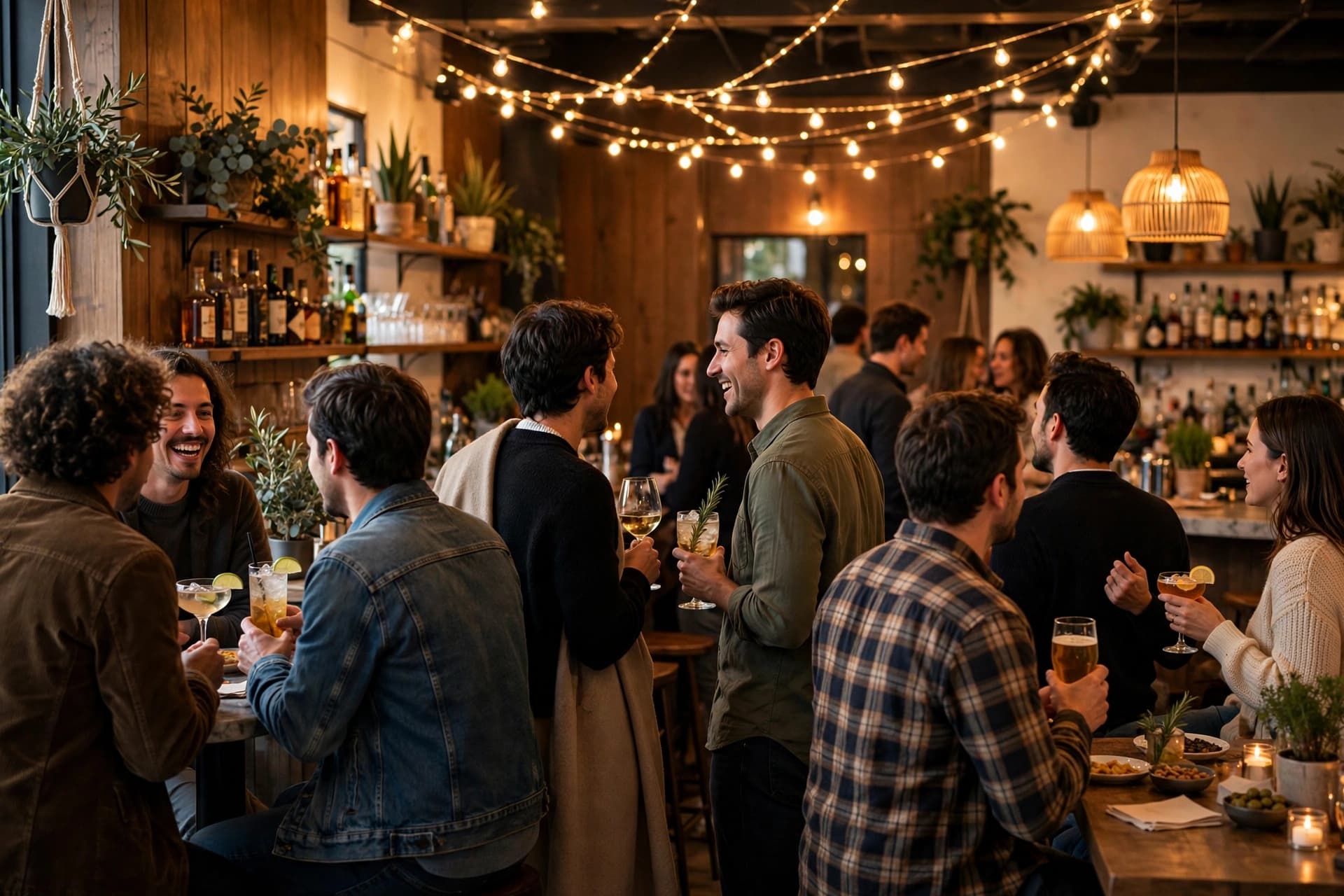
The swipe was built for volume. Infinite profiles, infinite novelty, infinite reasons to keep scrolling instead of meeting. For a while it worked: attention became revenue. But volume has a cost users eventually feel. Fresh community discussion on gay dating apps catalogued the complaints that drive people away: spam bots, climbing prices, arbitrary bans, broken notifications for paying users. When the digital experience feels like a toll booth, the offline world starts looking like the upgrade.
Events flip the incentives. When an app hosts a mixer or a group hangout, it succeeds only if people actually show up and have a good time. A bad app can still sell a subscription; a bad event empties the room. That is why industry watchers call this the community-vetting era: the matching mechanism becomes the community itself.
What the real-life shift actually looks like
- Event-first features: BLK's Events lets users see and join local gatherings. Meeting in shared spaces around a shared interest beats matching on a grid.
- Group-to-group matching: Tinder's Group Hangouts removes the one-on-one pressure of the first meeting. You show up with friends; they show up with friends.
- Community voting: Rivet's strangers-vote mechanic is chaotic, but it exposes the appetite underneath: people want input from other humans, not just a recommendation engine.
- Government-built matchmaking: Singapore's FirstDate shows the idea has escaped Silicon Valley entirely. Bringing people together offline is now treated as public infrastructure, not a gimmick.
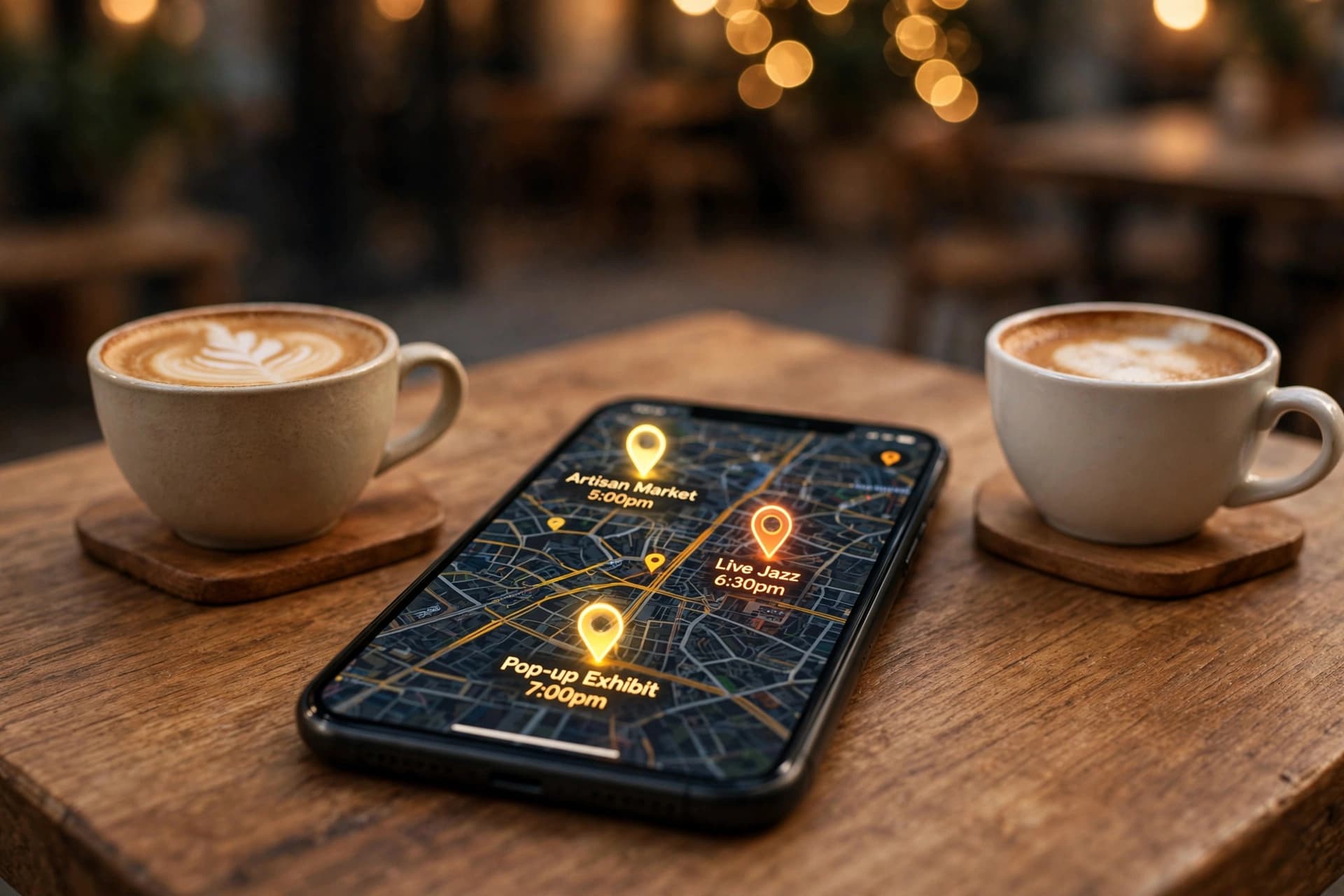
The throughline: nobody is pitching "more profiles." Everyone is pitching "a room full of real people."
Why this matters more for gay dating
Gay men already know the real-life event is the real product. Bar culture, parties, community gatherings: the queer scene has run on physical spaces for generations. Apps were supposed to be the on-ramp to the scene, not the replacement for it.
But the on-ramp got broken. Bots, fake photos, and paywalled everything pushed people back toward the bars out of frustration, not choice. An app that genuinely connects you to the scene, to events where you can meet people with your actual eyes, is not a new idea in gay culture. It is the original idea, restored.
What to look for in an events-era app
- Real local events, not decoration. An events tab with nothing in it is marketing. Look for apps that list actual upcoming events in your city and keep them current.
- Verification before the room. An event is only as good as the people in it. Live selfie checks, age verification, and human review matter more when the next step is meeting face to face.
- Safety built for meeting in person. Apps built for offline meeting should offer offline safety: date plans you can share with a trusted contact and check-ins during the date.
- The map, not the grid. A map of people and places near you fits the events era better than a grid of torsos.
- Pricing that does not gate real life. If the events are the product, they should not sit behind the most expensive paywall.
Where FindLucid.com stands in the offline shift
FindLucid.com was built for this exact moment. The app lists upcoming events members can browse and join, and the map shows people and places around you in the city you are actually in. Every member passes a live selfie check with human review before the first message, so everyone in the room passed the same signup check as the profiles. When you make a date, you can share a date safety plan with a trusted contact and get check-ins during the date.
No endless swipe. No unverified profiles. Just the shortest honest path from "we matched" to "we are in the same room." Create your free account at FindLucid.com and find your room.
The industry spent ten years trying to make dating happen inside the phone. It is finally admitting what gay men knew all along: the phone is the introduction. The room is the date.
Frequently asked questions
Why are dating apps launching events features in 2026?
User burnout and declining paid subscriptions pushed apps toward real-life connection. BLK launched Events in October 2026 after a trial saw 65 percent engagement, Tinder launched Group Hangouts, and Rivet went viral with community voting. The industry conclusion: the next advantage is a real room, not a better algorithm.
Are dating apps dying?
They are changing. Paid subscriptions are sliding at the big apps and surveys put Gen Z app burnout above 70 percent. The apps are not disappearing; they are pivoting from endless swiping to events, group matching, and community vetting.
Is it safer to meet someone at a dating app event than on a one-on-one date?
Meeting in a public group setting is generally a lower-pressure first step, but the same safety habits apply: tell a friend where you are going, keep your own way home, and verify the person's profile before you go. Public does not mean risk-free.
What should I check before joining a dating app event?
That the event is real and current, that the app verifies profiles (live selfie checks and human review), and that it offers date safety tools like shareable plans and check-ins.
How does FindLucid.com handle events?
FindLucid.com lists upcoming events in the app that members can browse and join. Every member completes a live selfie check with human review before the first message, and the app offers date safety plans shared with a trusted contact plus check-ins during dates.
Is the swipe really over?
Not over, but no longer the whole product. The industry's biggest launches of late 2026 are events, group matching, and community vetting. The swipe is becoming the introduction; the room is becoming the date.
Meet real, verified people
findlucid is an inclusive dating web app for everyone, with verification tools. Members state what they are looking for up front.
Join findlucid free
Comments (0)
Loading comments...